Tag Archives: recipe

Support Your Local Farmer

First, let me declare an interest: I’m a bloke. And blokes like tractors, which is why a couple of weeks ago I could be found with a soppy grin on my face walking around a display of vintage tractors and steam engines at the Weald of Kent Ploughing Match.

1930s Oliver 70, row crop tractor

Ploughing matches and point-to-point racing are some of the countryside’s best-kept secrets, and for a townie like me a terrific day out getting immersed in tweed and dogs.  We took a basic picnic and at the show bought St Michael’s Blue cheese from Silcocks Farm, pickled walnuts and cider  to eat later in the stubble.

It was the end of the short hop-picking season and among the trade stands (more, bigger, tractors!) there was a display of old farming photographs, some showing hop picking in the days when tens of thousands of Londoners, including children that should have been in school, would descend on the hop gardens for a working holiday staying in corrugated iron huts and picking hops.

By the 1950’s hop picking was becoming mechanised, and the annual migration from London gradually died out.
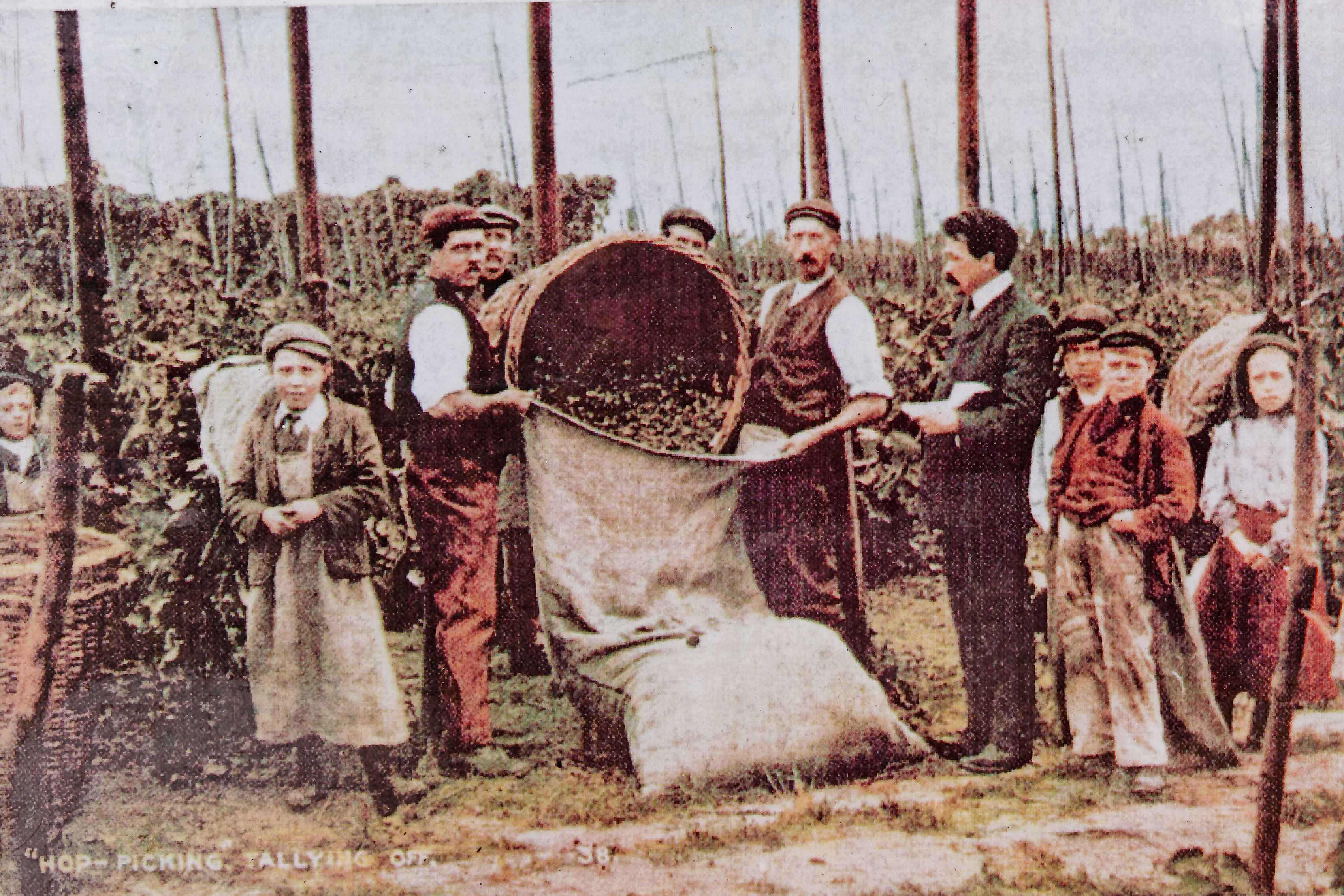
from the collection of I.Coomber and D.Ludlow

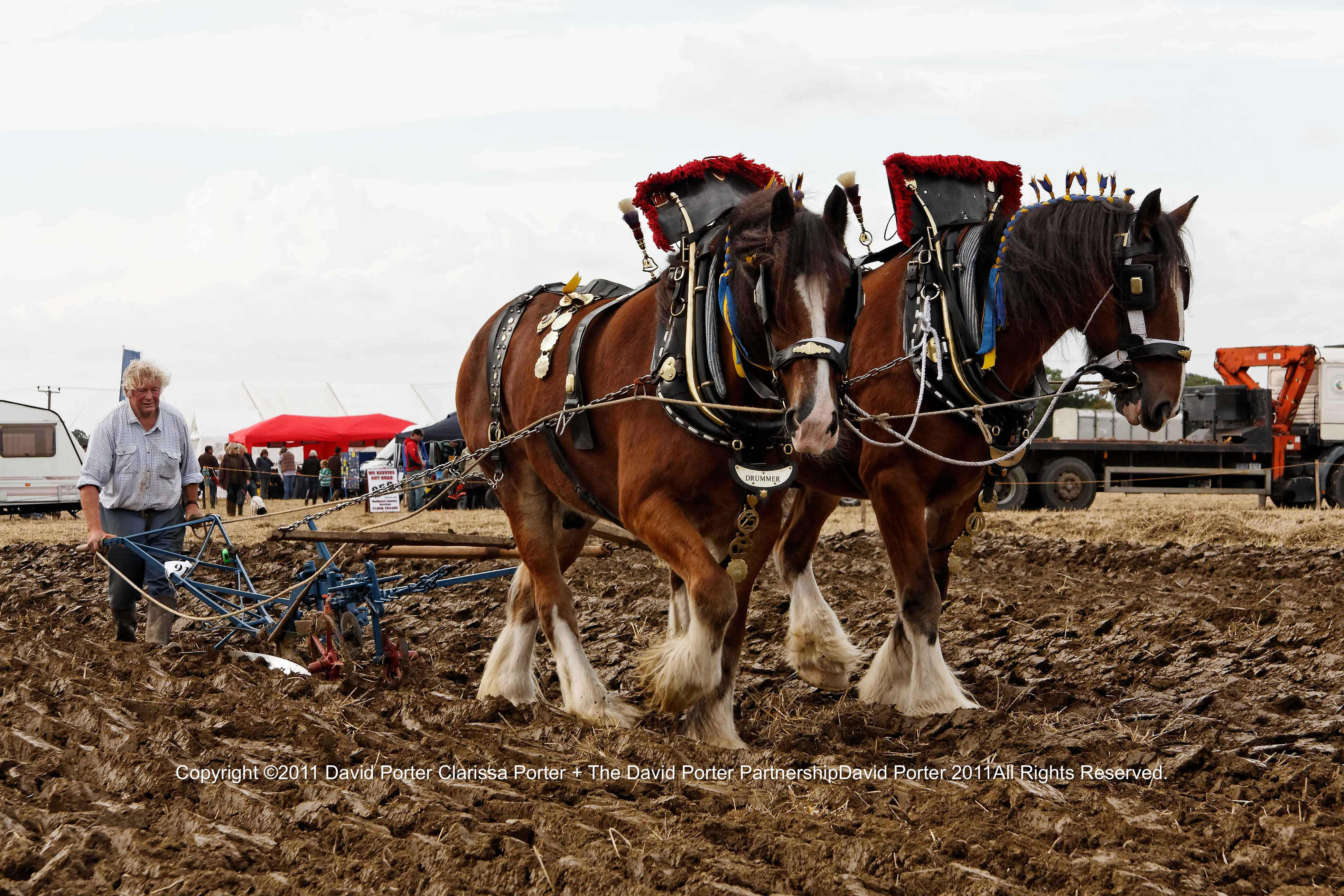
But its not all tractors doing the ploughing, pairs of heavy horses were stoically pulling especially polished ploughs; and for £5 you could have a go at driving horses and plough whilst trying to carve a straight furrow. The tractor match is judged depending on the type of plough, and points are scored for well-cut and straight furrows, uniformity, firmness, accuracy and the curiously-named ‘ins and outs’. Points are deducted for finishing the wrong way and leaving double wheel marks. The rules of horse ploughing are even stricter but the winner can look forward to the first prize of £12!
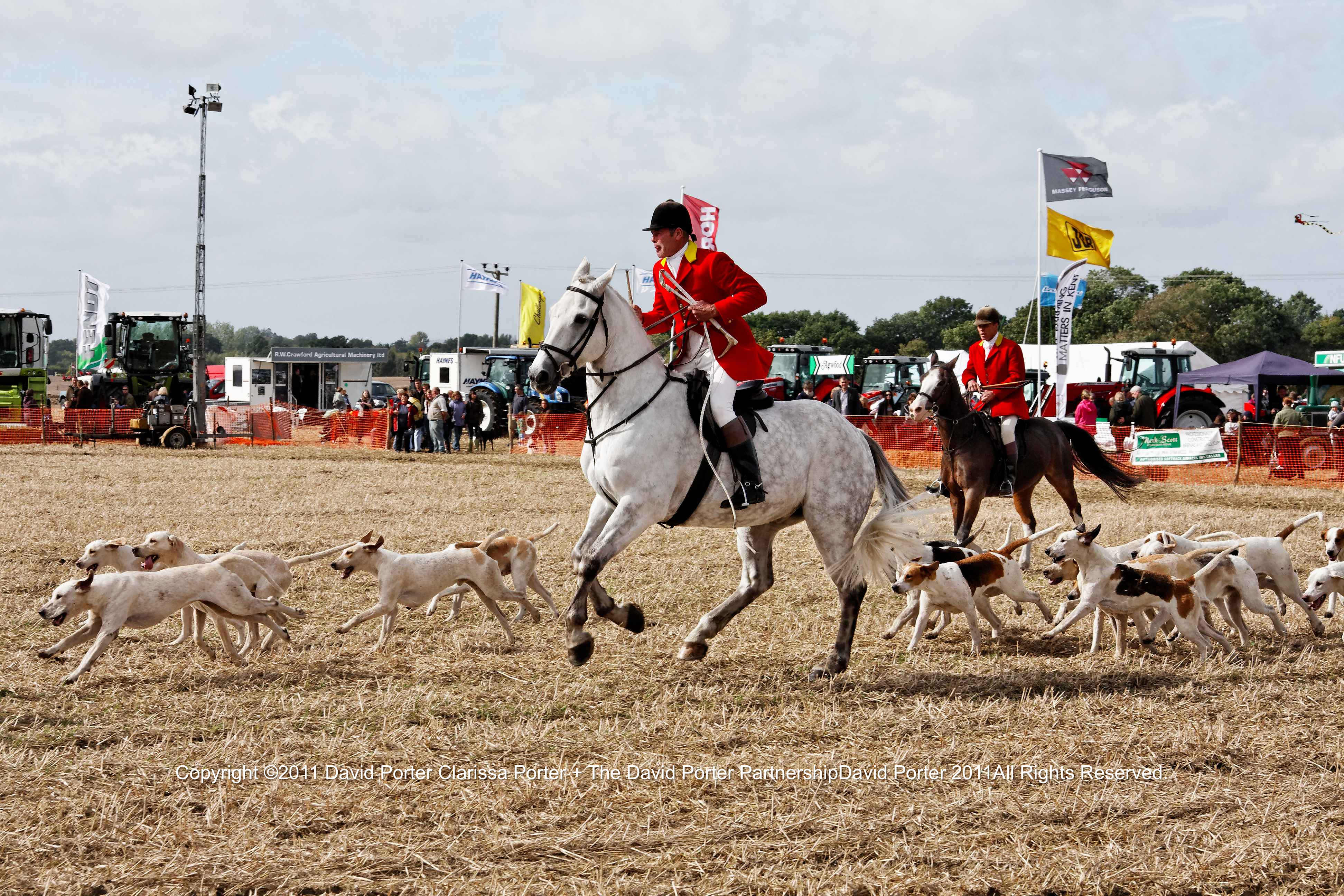
The Bolebrook Beagles trotted around the arena in a disorganised fashion, and later a pack of foxhounds from the Ashford Valley Hunt ran around following the huntsman and two whippers-in, before the ritual invitation for children to come into the arena and meet the dogs. I realise hunting is controversial, and the commentator repeated several times that the hunt operated within the law, but obviously no one at this show was offended in any way and the ring soon filled with children. Contrary to what you might think a foxhound is not an aggressive blood-thirsty animal but is extremely friendly, unlike some of the dogs in my local park. To be surrounded by twenty foxhounds licking and wagging is a happy experience, but then I’m not a fox.
Three years ago I took a friend to the East Kent Ploughing Match. As a confirmed Guardianista he saw foxes as the cuddly animals he fed in his back garden. Farmers, he thought, were all rich and right-wing,  sponging subsidies from the rest of us and driving around in 4x4s.  They’re just ordinary people I told him they just get muddier, and they work longer hours seven days a week, putting up with endless inspections from government officials and spending their evenings filling in the mountain of forms demanded by the EU.  He couldn’t bring himself to stroke a foxhound but he grudgingly admitted he’d enjoyed himself, apart from the extortionate price of the venison burger (£3-50), and remarked that everyone had been very nice and polite, and he’d not heard a four-letter word all day. I bought him a “Support British Farmers” mug which once he was back at home went straight to the back of the cupboard and was never seen again.
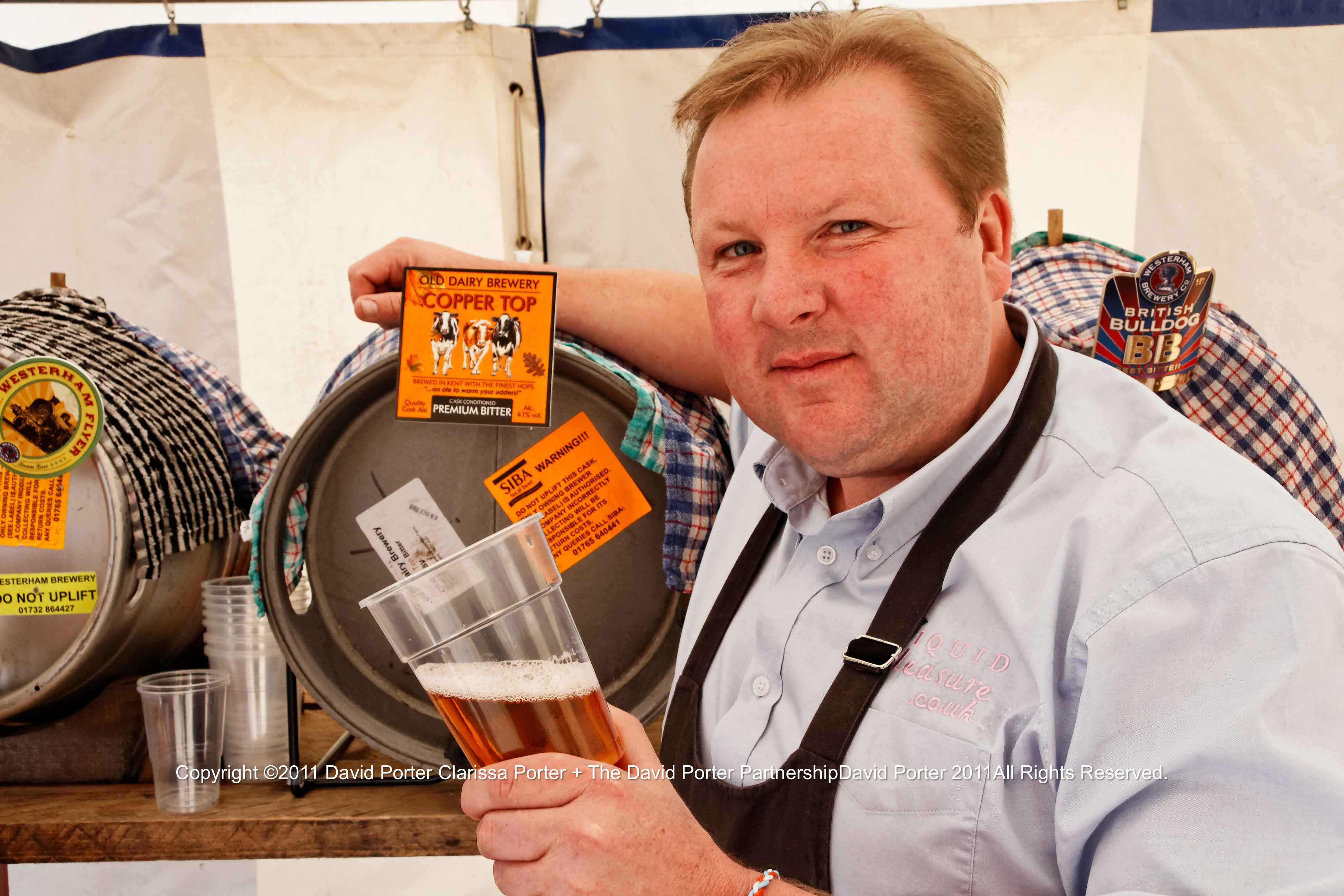
Ian Florey of Liquid Pleasure in Tenterden

Walking past one of the beer tents a voice called “David!” It was Nicky Aldhouse from Wadd Farm, helping Ian Florey sell local beers. Ian runs Liquid Pleasure an online wine merchant with a shop in Tenterden. Ian’s favourite small local brewery is the award-winning Old Dairy Brewery which he promotes at shows and charity events,  decorating the tent with Nicky’s hops.  Nicky and her husband Guy rear prize-winning Suffolk sheep at Wadd Farm, and try to be as self-sufficient as possible growing every sort of vegetable and soft fruit imaginable.  Wadd Farm is one of the oldest farms in Kent, going back to the 1540s. “We never have a holiday,” said Nicky, “there’s always something to do, but this is the best job in the world!” Like many Kent farmers they still grow a few rows of  hops, for the sake of tradition and for their homemade beer. Here’s Nicky in her polytunnel with her tomatoes…

Nicky Aldhouse

Every year they hold ‘Wadd Fest’ a music festival on the farm in aid of Demelza childrens’ hospice. I was really impressed with Nicky’s larder, stuffed with homemade wine, beer and preserves; each year Nicky makes over 30 bottles of wine, mostly from over-ripe fruit. “It’s important not to waste any fruit,” she said, “and it’s so simple to do.” It was Nicky that told me about ‘Farmhouse Fare‘, a collection of recipes from the readers of Farmers Weekly. I went home and ordered it on Amazon, it’s a simple, easy to use and unpretentious collection of recipes and one of my all-time favourite cookbooks.
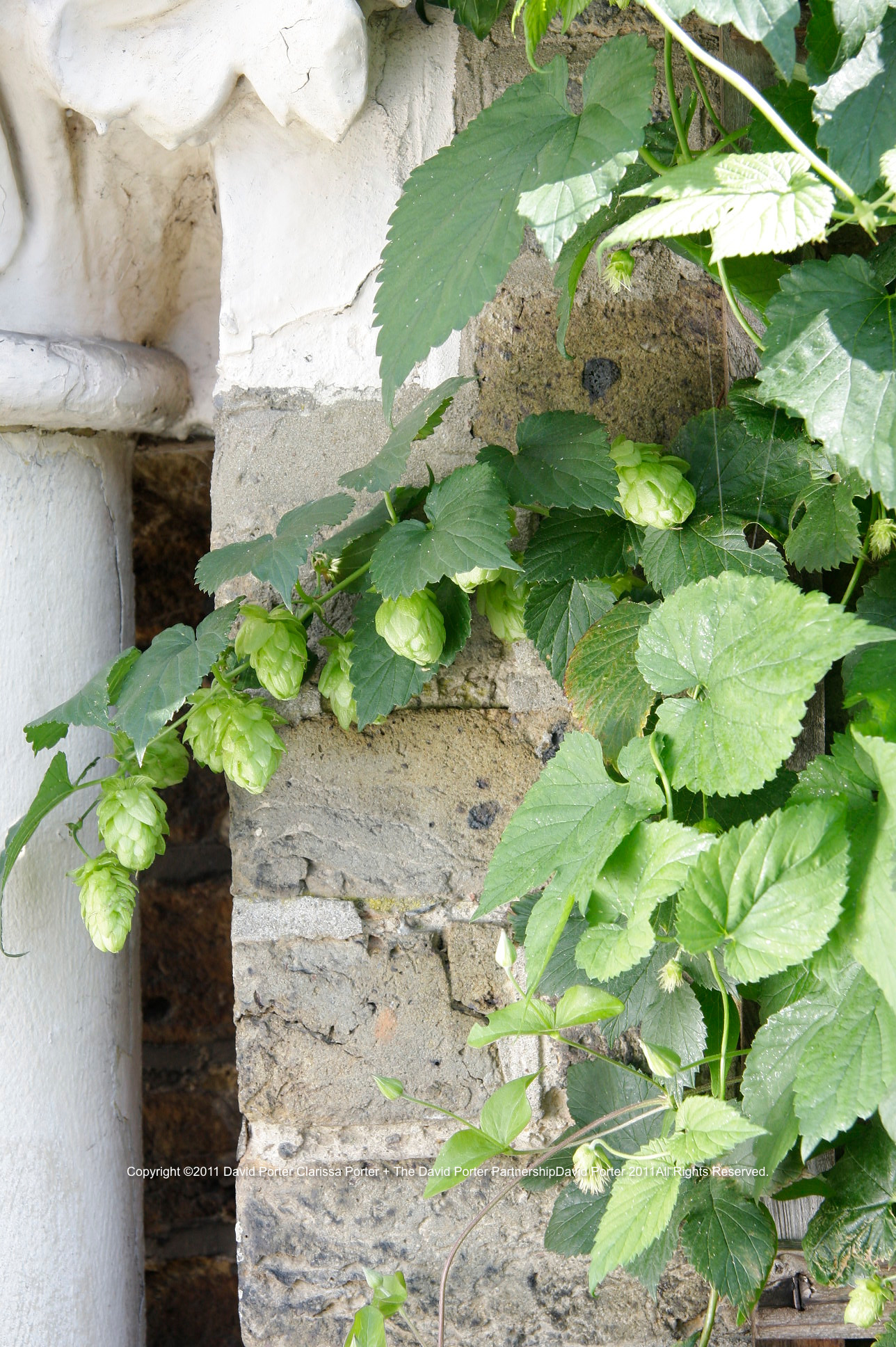
We’ve a hop growing around our front door, and a nearby pub has hops growing in its garden, if you look around carefully there are wild hops growing here and there.  The Hop Shop at Castle Farm in Shoreham near Sevenoaks sells hop plants, that’s where we bought ours, and if you’re feeling ambitious they sell old hop poles and wonderfully enormous balls of thick rough hop string that wouldn’t look out of place in The Conran Shop.

The hop garden at Castle Farm. Picture ©Thomas Alexander

Castle Farm is an old hop garden, now more well known for the lavender fields than the hops. When the price of hops collapsed as brewers turned to cheaper imports, Caroline (above) and William Alexander diversified into lavender, herbs and rare apples, and their son Thomas Alexander is a talented photographer.  Caroline developed a lavender oil just for cooking, something we use in cake-making and always have at home. Castle Farm is local enough for me, just 14 miles down the road, and the farm shop is always worth a visit. I came across an interesting blog about making beer using hops from Castle Farm, you need surprisingly few and Castle Farm sell hop bines, the complete stems with hops attached, during the season.

Next to Nicky’s beer tent was the hog roast, offering roasted pork in huffkins. The queue was too long for me, but huffkins are worth making at home.  The huffkin is a traditional Kentish teacake, unique in that the baker made dent in the top with his thumb, and they have a slight beer flavour.  Some Kent bakers still make them, but they are becoming quite rare. We only make them a few times a year, and at this time of the year Clarissa likes to push a green hop into the dent in the huffkin to add to the flavour.
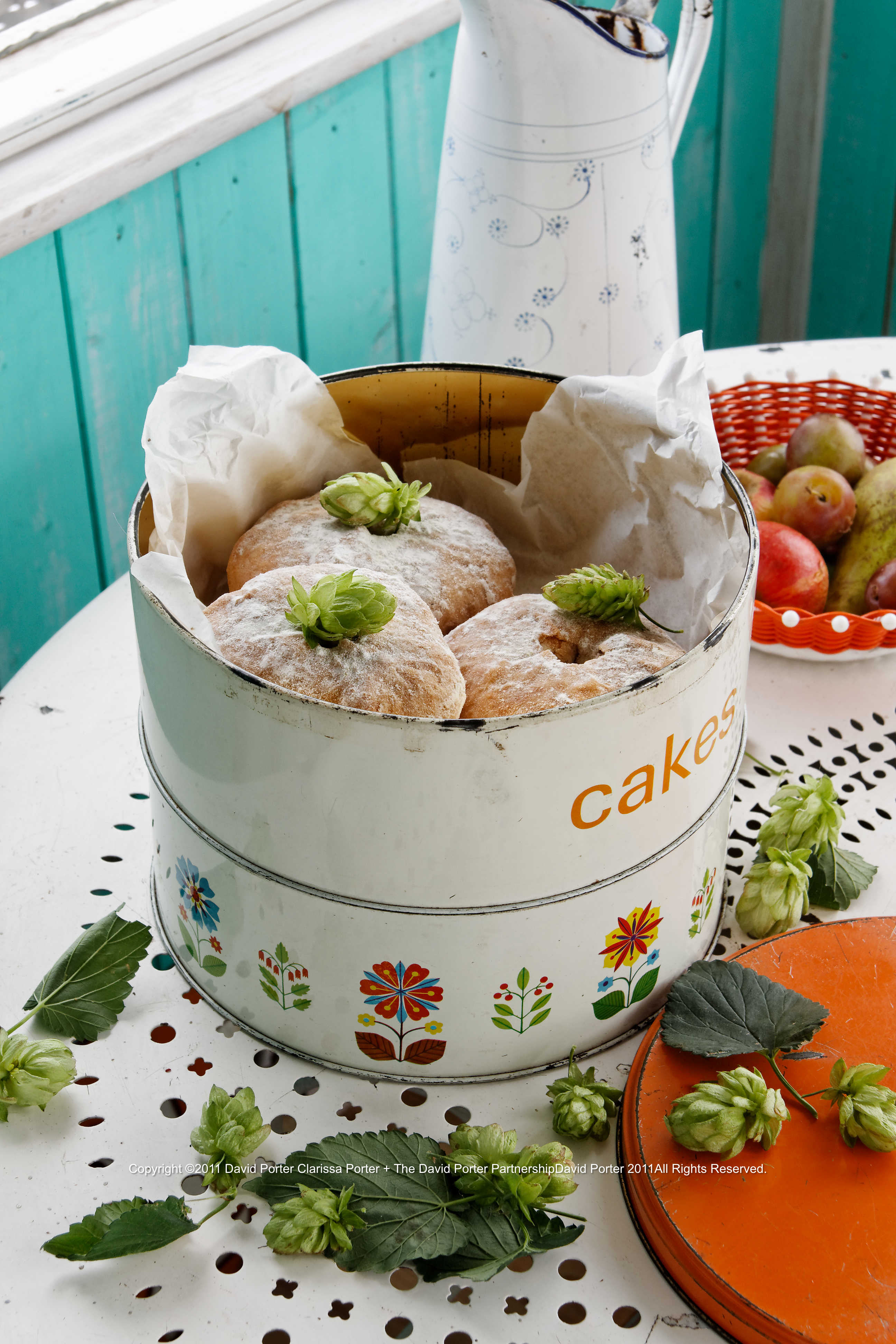
Huffkins-Kentish-Hiffkins-recipe for Kent Huffkins

Kentish Huffkins

Kentish Huffkins

Preparation time about 1 hour 45 minutes including the resting times.

Cooking time 20 – 30 minutes depending on the size of the individual huffkins.

Ingredients (makes 6 – 8):

10g dried yeast

2 tsp sugar

225ml warm water

110g lard

2 tsp salt

225ml scalded milk. That is milk that has been heated till it almost boils. This disables some proteins that would stop the yeast from properly fermenting.

500g plain flour, sifted

Flour for dusting

Method:

Activate the dried yeast in a little warm water with a pinch of sugar added. When it froths it is ready.

Cream the lard, salt, a pinch of sugar, add the yeast and then the sifted flour, making a dough.

On a floured surface knead the dough till it feels ‘springy’ to the touch. Then put the dough to one side in a bowl covered with a clean dry tea towel. Leave the bowl of dough to rise in a warm dry place for about 1 hour.

Then roll out the dough again so it is about 15mm thick and use a knife to cut-out oval shapes about 85mm across the length (the traditional shape), or larger circular shapes if you wish. Some bakers make larger huffkins.

Put your pieces of dough onto a greased baking sheet, well-spaced, and cover with some damp muslin, then leave to rise for further 30 minutes. Pre-heat your oven to 220C.

After they’ve risen, using your thumb make a large dent in the middle of each huffkin. Dust them lightly with a little flour then put them into your oven. How long you bake them for depends on how big they are, but remember they are soft crusted, so don’t over do it!

When they are cooked, remove them to a wire rack to cool, covered with a dampened tea towel to prevent the crust from hardening. Finally dust with a little flour. The dent will have almost disappeared, Clarissa likes to push a green or dried hop into the dent, you may have to make it larger to do this. I’d serve sliced in half and spread with homemade jam!

A Life of Pie

I almost called this “Home Alone”, but I wasn’t entirely alone, there were the four dogs, and the pork pie.

Clarissa jetted off to Dubai and then India for a week as the unpaid assistant of an internationally famous DJ. That’s a sentence I never thought I’d write. Luckily for me she was anxious about how I was to survive her absence and suggested a pork pie to help tide me over. Clarissa’s pork pies crop up from time to time throughout the year, though at increasingly longer intervals more’s the pity.

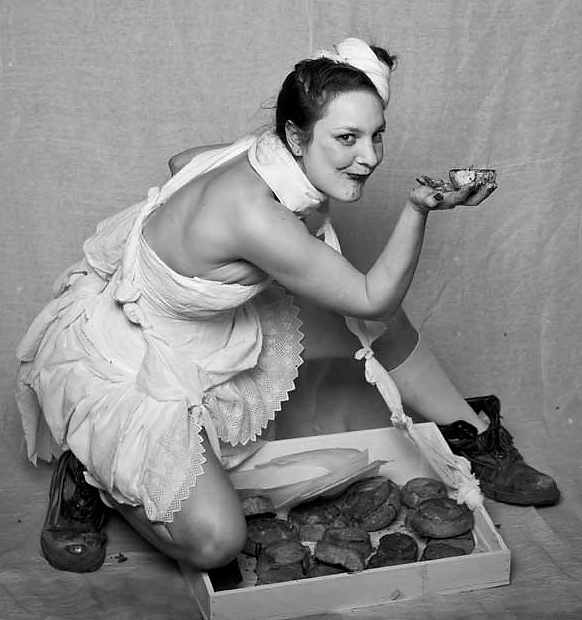
A few years ago pies of all shapes and sizes seemed to pour out of our kitchen. She even painted a portrait of herself perched on a giant pasty and called it ‘Madonna of The Pies’.

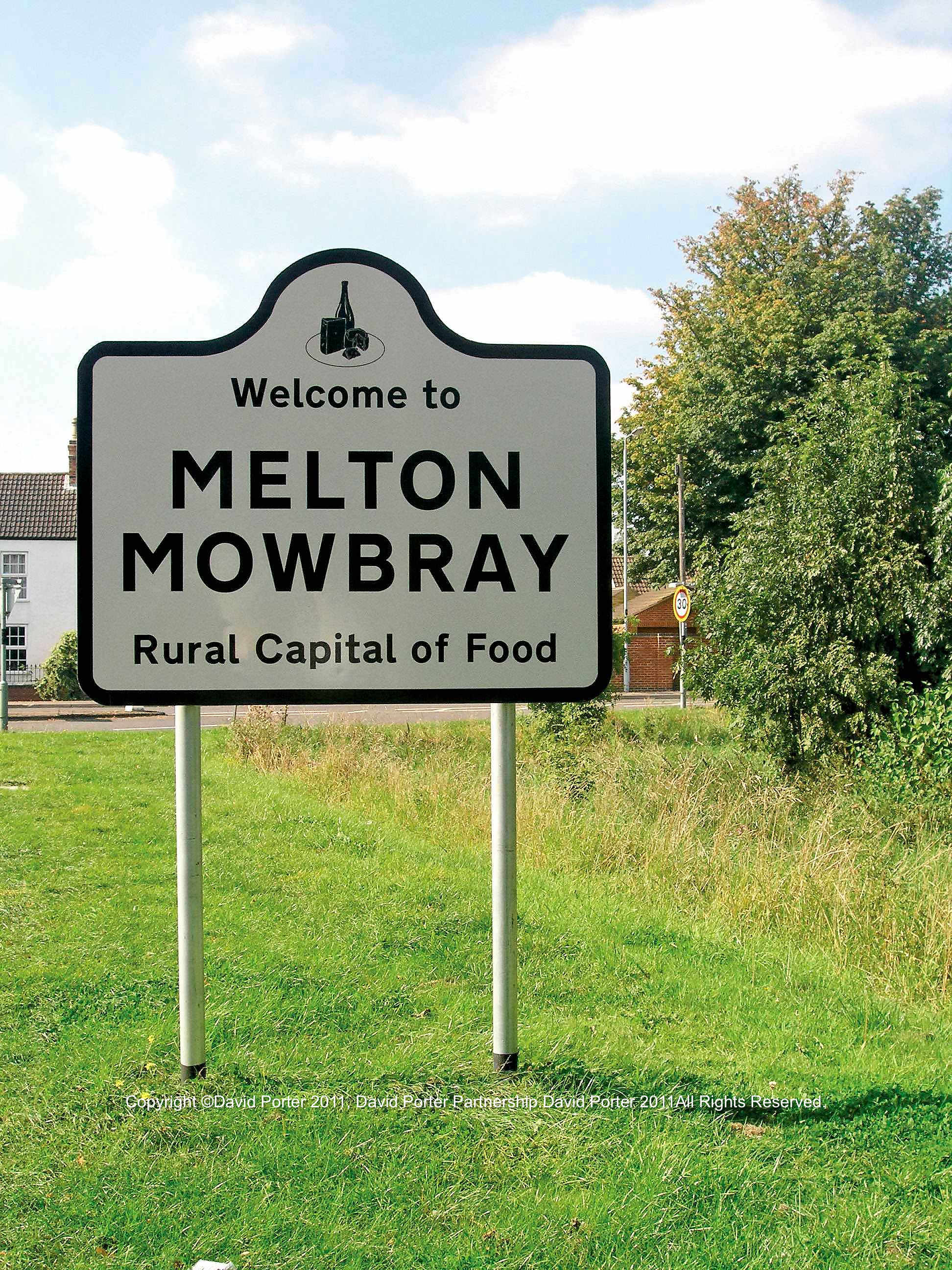
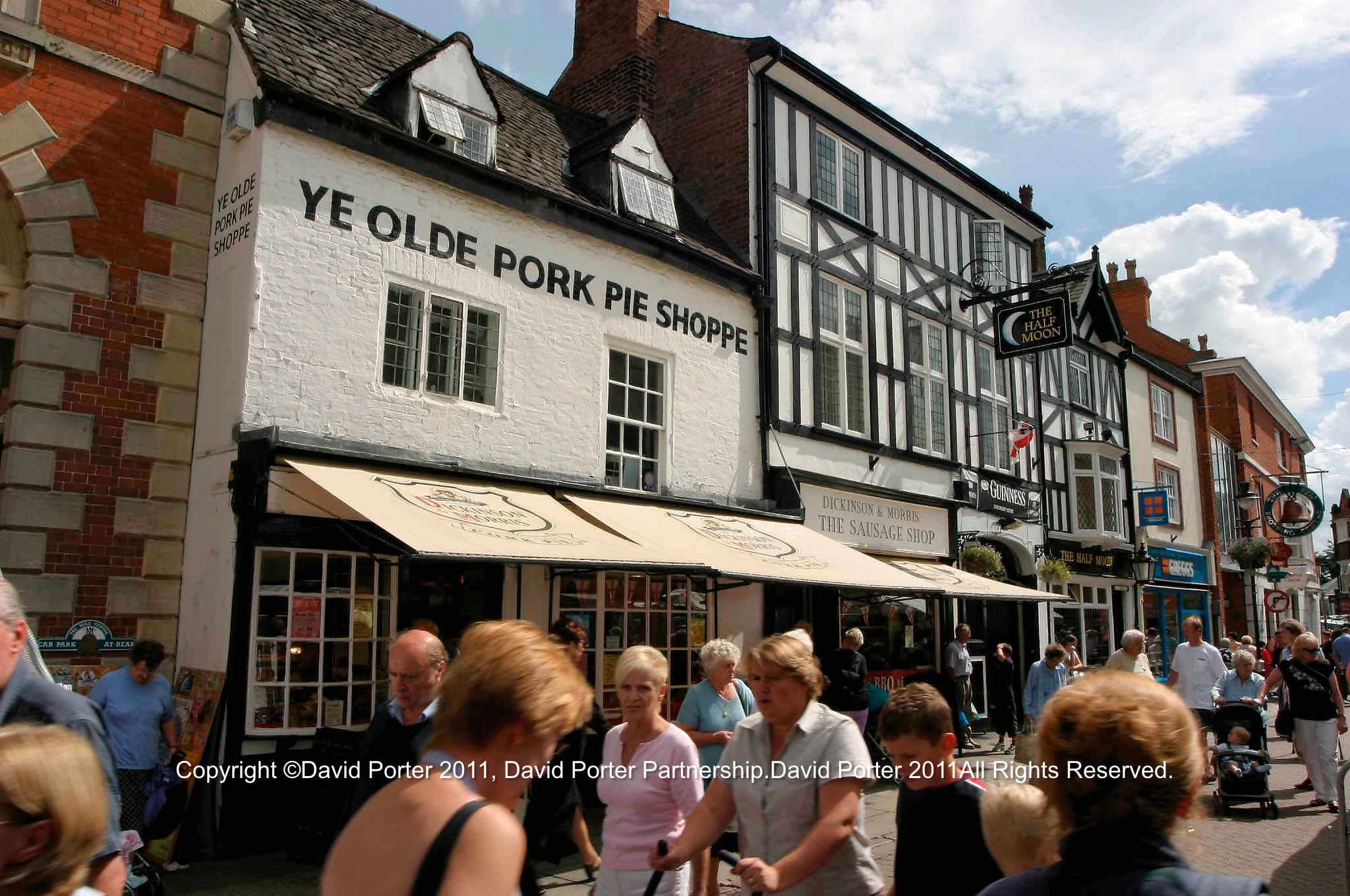
The Oxford Dictionary notes that the word ‘pie’ dates from the first years of the 14th Century, Alan Davidson in his “Oxford Companion to Food” suggested pie maybe shortened from ‘magpie’, a collection of different ingredients. Early pies were called coffyns, the pastry, hard and strong,  a container for the filling and sometimes discarded.  The pastry was so indestructible that the pie could be placed directly onto the embers of the fire so that the pie crust became its own oven. The raised pork pie is a direct descendant of these early coffyns, certainly the first pork pie recorded in the Melton Mowbray area dates from the 14th Century.

The old recipes are seasonal, traditionally September is the beginning of the pork pie season because Autumn was the time when pigs were killed in readiness for the long hard winter. Lard rendered from pork fat is an essential ingredient in the pastry, which is called ‘hot water pastry’ and necessary to construct a raised pie as distinct from a flat or plate pie, or where the pastry crust simply  covers an open pie. The dough is raised by hand, sometimes over a wooden ‘dolly’ and sometimes using a bowl as a mould to shape the pie. Clarissa has made some free-form pies as well, but however you do it the resulting pie is likely to be uneven, sometimes very uneven as the pie will sag and tilt during the cooking. The baked crust will be shiny and fairly water-tight so you can fill the pie with hot liquid meat jelly. One of our earliest pie-making mistakes was to not make the crust thick enough to hold the stock without collapsing. Getting the amounts right for the jelly is a bit hit and miss, but I don’t think it is crucial if you don’t fill the pie completely. The oldest recipes use uncured pork and mashed anchovies, the result is an old-fashioned taste and distinctive grey meat, unlike the artificially pink shop-bought pork pie.

Melton Mowbray has attained  PDO status (protected designation of origin) in recognition of their pies historic importance, but other areas for instance Yorkshire and Cheshire lay claim to producing some excellent traditional pork pies. Wilson’s the Leeds butchers have become famous for their three-tiered pork pie wedding cake,  and the Pork Pie Appreciation Society is in Yorkshire. Every March they hold a pork pie competition; here’s their amazing  tribute to the pork pie!

Malika Mezeli of 'Lardy Da,' pork pie maker extraordinaire

Nearer to home Malika Mezeli  aka ‘Lardy Da’ makes homemade rare breed pork pies and renders her own lard from pork fat at home in Peckham. I think Malika is a local treasure, she tries to use every part of the animal and even makes pig’s head terrine!

©Leo Johnson

You can find Lardy Da at Blackheath Farmers’ Market on the first and second Sunday of the month, and at other London markets.

In the past I’ve bought pork for our pies from Wellbeloved’s in Tanners Hill, or  Christine’s and JC Smith’s in Deptford High Street, and memorably from Northfield Farm in Rutland and Borough Market.  Memorably because if like me you can remember what pork used to taste like before the  supermarkets told us we wanted lean flavourless pork, then Northfield Farm’s pork is indescribably nostalgic; “there are few places I’d travel 400 miles to buy meat,” said Clarissa Dickson Wright of Northfield Farm, which is also a member of the Melton Mowbray Pork Pie Association.  I did travel to Northfield Farm a couple of years ago, and met farmer and ex-banker Jan McCourt. Jan took me to see his Iron Age pigs, he suggested we didn’t get too close to them;  they were, he said, a bit aggressive and likely to ignore the electric fence in an attempt to attack us!

Jan McCourt of Northfield Farm, Rutland

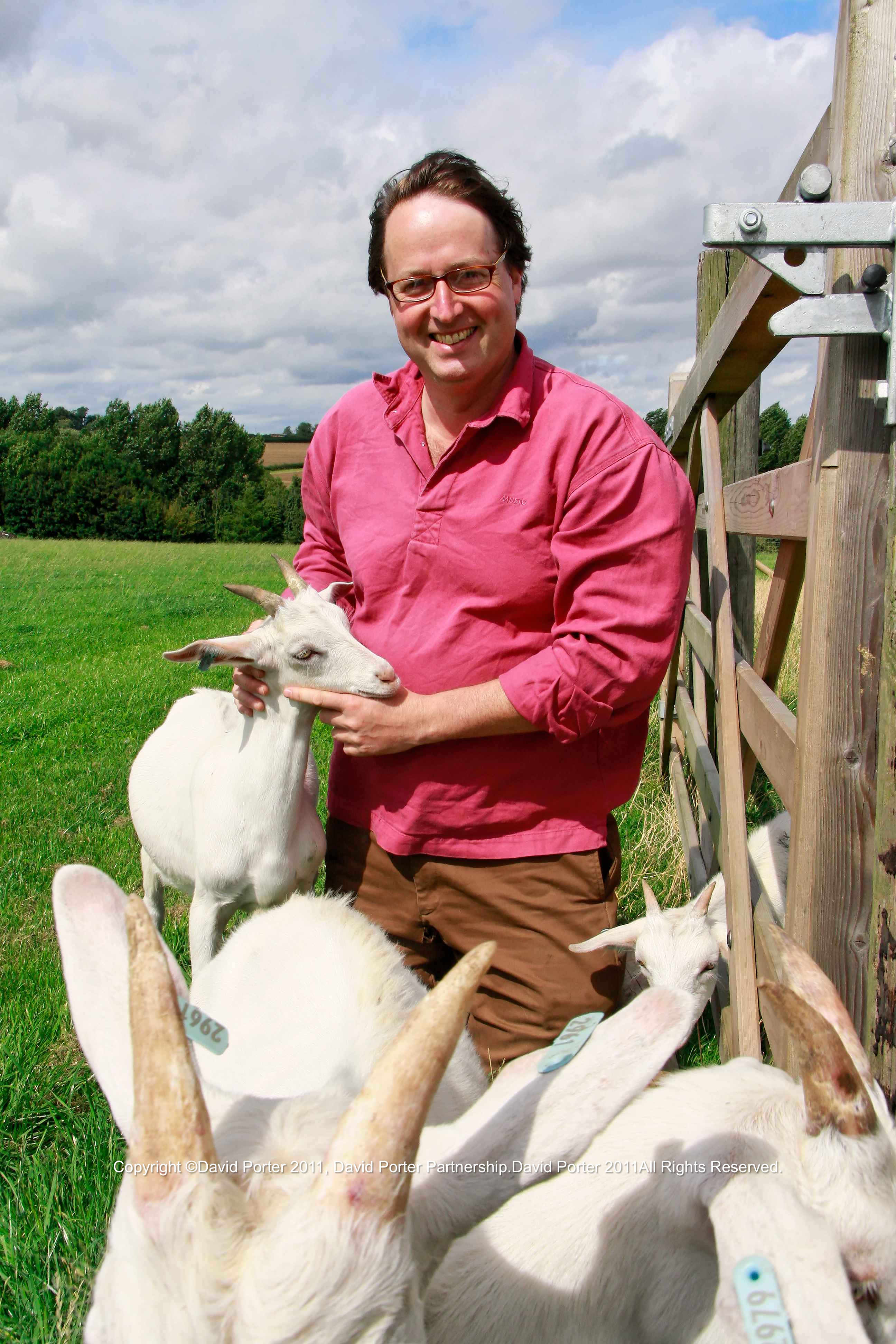
So I had to be content with a photograph of Jan with some goats, their only aggression was to try and eat my camera bag, and butt me from behind as I bent over.

But this time we were in Nunhead so we bought the pork from HA Smith & Son. This would be the biggest pie Clarissa has made for some time, and I’m happy to say that even sharing slices with the lurcher, it lasted the week. Of course I was lonely that week and even talked to the dog. Every night on the doorstep after his walk I quoted Withnail to him: “first, we go in there and get wrecked, then we eat a pork pie!” He looked puzzled but agreed.

  A Hand Raised Pork Pie

(serves 12)

The ingredients and method are listed in the order they were prepared and cooked,  the cooking time for the pie is about 2 1/2 hours, preparation 30 minutes, and preparing the stock 3 1/2 hours, but that happens along with the cooking of the pie, or you can prepare the stock earlier.

For the Jelly Stock:

Bones from the pork, shoulder and ribs

2 pigs trotters

1 carrot

1 onion stuck with 4 cloves

Sprigs of Thyme and Parsley and some bay leaves

1 tsp peppercorns

1 tsp juniper berries

3 ltrs water

Pepper and salt, or 2 tbs fruit jelly

Method:

Put all the above into a large saucepan and bring to the boil, then reduce the heat and simmer for 3 hours. Then strain through a sieve and put back on the heat till the stock is reduced to about 450 ml.  Season with pepper and salt, or 2 tbs of fruit jelly (I used some wild plum jelly I’d made).

Allow to cool, it will set into a jelly.

For the filling:

1.35 kg pork belly, ribs removed by the butcher and reserved for the stock

1.35 kg pork shoulder, bone removed by the butcher and reserved for the stock

(when the bones have been removed the weight is considerably less)

1 tbs chopped fresh sage

Few scrapes of nutmeg

1 tin of anchovies finely chopped

1 onion, grated

Fresh ground black pepper

Method:

Hand chop the meat and fat rather than mince so you have small chunks. Put all the meat into a mixing bowl and add the rest of the ingredients for the filling, mix it all together with your hands or a wooden spoon then put to one side.

For the Hot Water Pastry:

400 ml water

340 g lard

900 g plain flour

1 tbs icing sugar ( for a crispy crust)

1/2 tsp salt

1 egg, beaten

8 bay leaves

Greaseproof paper

String

Method:

In a large saucepan bring the water and lard to the boil. Mix the salt and icing sugar into the flour, remove the hot liquid from the heat and quickly shoot the flour into the hot water, stirring with a wooden spoon. You’ll need a strong spoon because you must stir briskly till the dough forms a smooth ball. Turn out the dough onto a board and when it is cool enough to handle quickly knead the dough for a few moments. Then let it cool some more and divide it by cutting off a quarter of the dough and putting that to one side for the lid.

The cheats way to make a raised pie would be to use a loose-ringed cake tin and press the dough into the tin and up the sides. But Clarissa took the larger ball of dough and plunged her fist into the middle and gradually worked the dough outwards and at the same time upwards, drawing it up and out using both her floured hands. When the dough looks about right, about 15 cm high, and in other words like a pie (!), draw the sides inwards slightly then quickly secure the sides with a piece of grease proof paper folded in half and loosely tied with string.

Pile the meat filling into the pie, pushing it gently down and around the pie case. Remove the paper and gently mould the pastry against the filling with the palms of your hands. Take the reserved ball of dough and just using your hands, flatten it into a lid and lay it onto the pie, crimping the lid into the sides with your fingers. Decorate the top with bits of leftover dough and make a large steam hole in the middle of the lid. Wet the bay leaves and arrange them around the outside, then again wrap the pie sides in greaseproof paper doubled-over and secured with string. Glaze the top with beaten egg. Then using a wide fish slice, mine is 25 cm wide, or two together, carefully slide the pie onto a lipped baking sheet and put in your oven preheated to 180 C (350F) for 2 – 2 1/2 hours. Remove from the oven and take off the paper then put it back in the oven for 15 minutes.

Remove from the oven, tie more greaseproof around it, loosely, and allow to cool. Meanwhile, gently warm the jellied stock so it melts and using a funnel or great care, pour the stock into the pie through the steam hole. This takes a little time as the stock dribbles down through the pie and fills the spaces inside, so do it a little at the time. Leftover stock can be frozen for future pies! Finally, if you wish, fill the steam hole with fruit jelly, or jam, which I’d also serve with the pie.

Allow the pie to cool and set overnight still wrapped in the paper, before imagining yourself in a coaching inn on the Great North Road, a deerhound at your feet, sitting beside a blazing fire with a pint of Porter and a slice of pie, the taste of Old England.