
“Oooh, look at that big thistle!” remark passers-by peering into our front garden. We’ve two artichoke plants thriving and growing despite the clay soil and the constant buffeting by cat-chasing dogs. Usually we leave them to burst into striking bright purple flowers, just like giant thistles in fact. This year we’re going to eat them, I’m hoping the plants will produce more artichokes as we harvest the globes.

Globe artichokes have an exciting history. They are one of the world’s oldest continually cultivated plants and have been linked to Greek gods, Roman emperors, French Royalty, Henry VIII, and the Mafia.
The Greeks believed the goddess Cynara was transformed into an artichoke after she rejected her lover Zeus and he threw her from Olympus. The Romans believed the artichoke to be a powerful aphrodisiac and women were forbidden from eating it. The House of the Vettii in Pompeii, the house with the erotic frescos, has some very interesting depictions of artichokes! A thousand years later artichokes were still considered too racy for women. In France, Louis XIV married 14 year old Catherine of Medici not knowing that she secretly enjoyed eating artichokes. If people knew, she said, they’d point and gossip!
French settlers took them to the new territory of Louisiana in the 17th Century where they quickly became a valuable crop. But in the 20th Century some Italian immigrants rented land in California and soon had the USA’s most productive artichoke farms. The Mafia took an interest and Don Ciro Terranova of the 116th Street Mob made the farmers an offer they couldn’t refuse, monopolising the artichoke business. What followed became known as ‘The Artichoke Wars’, and serious violence broke out.
 Police mugshot of Ciro ‘the Artichoke King’ Terranova
In 1935 the mayor of New York, La Guardia, went on the radio, “Lets drive the bums outta town,” he squeaked (he had a very high-pitched voice).

La Guardia banned the display and sale of artichokes in his city in an attempt to stem the violence. The mayor’s love of artichokes drove him to make sure prices dropped, and the ban was lifted. A few years later in 1947, a certain Norma Jean Baker was crowned ‘Miss California Artichoke Queen‘, another step on her way to becoming Marilyn Monroe.

Closer to home, in 1530 Henry VIII was courting Anne Boleyn in Greenwich Park and in need of a regular supply of artichokes. A 16th Century doctor had written that eating artichokes made women more ‘desirable’ (read:’available’), and men less ‘tardy’?! Henry ordered his gardeners to plant them at his New Hall Palace in Essex. Their daughter Elizabeth I is linked to the Queen’s Head and Artichoke near Regents Park, which was once a hunting lodge named for the artichokes served there to the Queen by her master cook Daniel Clarke. Deptford was famous for its asparagus, and I expect artichokes were grown here as well because in 1614 an Italian visitor wrote that in England artichokes were in season most of the year, unlike in Italy. Fruit and vegetables were shipped from Deptford’s market gardens by river to the City. The other area noted for artichoke growing was the Fens around Ely. Artichokes were taken by boat to London along the drains and rivers of the Fens; these days artichokes are still being grown on the Fens, but now they arrive in London by courier. Third generation Clive Martin grows organic artichokes on 30 acres of his 500 acres. “Some of our customers come back week after week for artichokes in the season,” he said, “I really enjoy them, they look fantastic in the fields.”
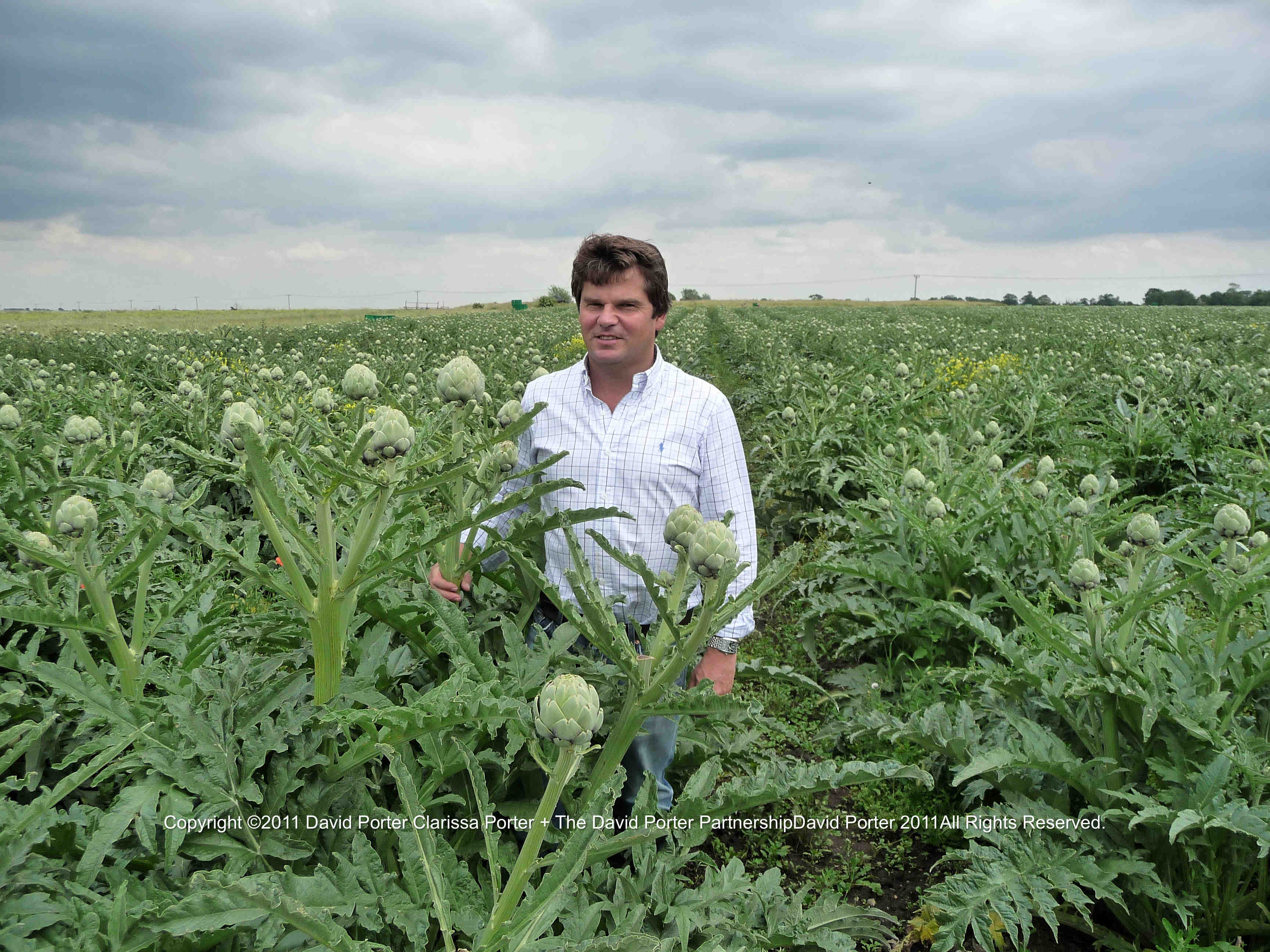
Clive has an Italian customer who told him she bashes the artichoke with a rolling pin to loosen the leaves, then stuffs herbs and sopices into the spaces between the leaves, ties it all back tightly together and then boils the artichoke as normal. “She says ours are the best she’s ever tasted!” I ordered a box of Clive’s artichokes, and can confirm they were beautiful, far, far removed from the sad, dry and tired foreign examples you see in supermarkets.
In 1597 herbalist John Gerard described how to prepare and eat artichokes, something that still puzzles people today., as Clive says, “the only problem with artichokes, is getting people to eat them.”

When you’ve cut or bought your artichokes wash them under running water and then plunge them upside down in water with a couple of lemon wedges. This stops them going brown. They’ll keep like this in a fridge for a couple of days. When you’re ready to use them, cut off the stalk flush with the base. The easiest simplest way to eat an artichoke is by boiling it, then pulling off the petals and dipping them in a bowl of melted butter, then sucking the soft inner base of the petal through your teeth, discarding the tougher tip.
Here are two recipes, the first is the classic way to eat an artichoke, more or less unchanged since John Gerard wrote about it 400 years ago.

Artichoke with Garlic and Lemon Butter
You’ll need 1 artichoke per person, soaked in lemony water with a pinch of salt, then drained.
Place the artichokes in a large pan with a squeeze of fresh lemon juice. Cover with water and bring to the boil. Simmer for 30 to 45 minutes depending on their size and age. A skewer pushed through the artichoke at the widest point of the globe will tell you if they are cooked. It should be easy, with just a slight resistance.
Drain, and meanwhile make the butter sauce by melting 110g of butter, and very finely chopping 2 cloves of garlic. Mix the butter and garlic then add the juice from half a lemon and season with plenty of ground black pepper. I usually finish with some very finely chopped parsley, just a pinch.
To serve, put your artichoke on a plate and open the petals a little, they’ll be loose and spread easily. Serve the butter sauce in a pretty teacup or ramekin. When you’re very messy you’ll have eaten all the petals and reached the ‘choke’. The choke is the hairy covering of the heart. Just cut the choke away from the heart and then eat the heart. In Italy, street sellers trim most of the petals from the artichoke when you buy them so you’re just left with the delicate inner petals and the heart.
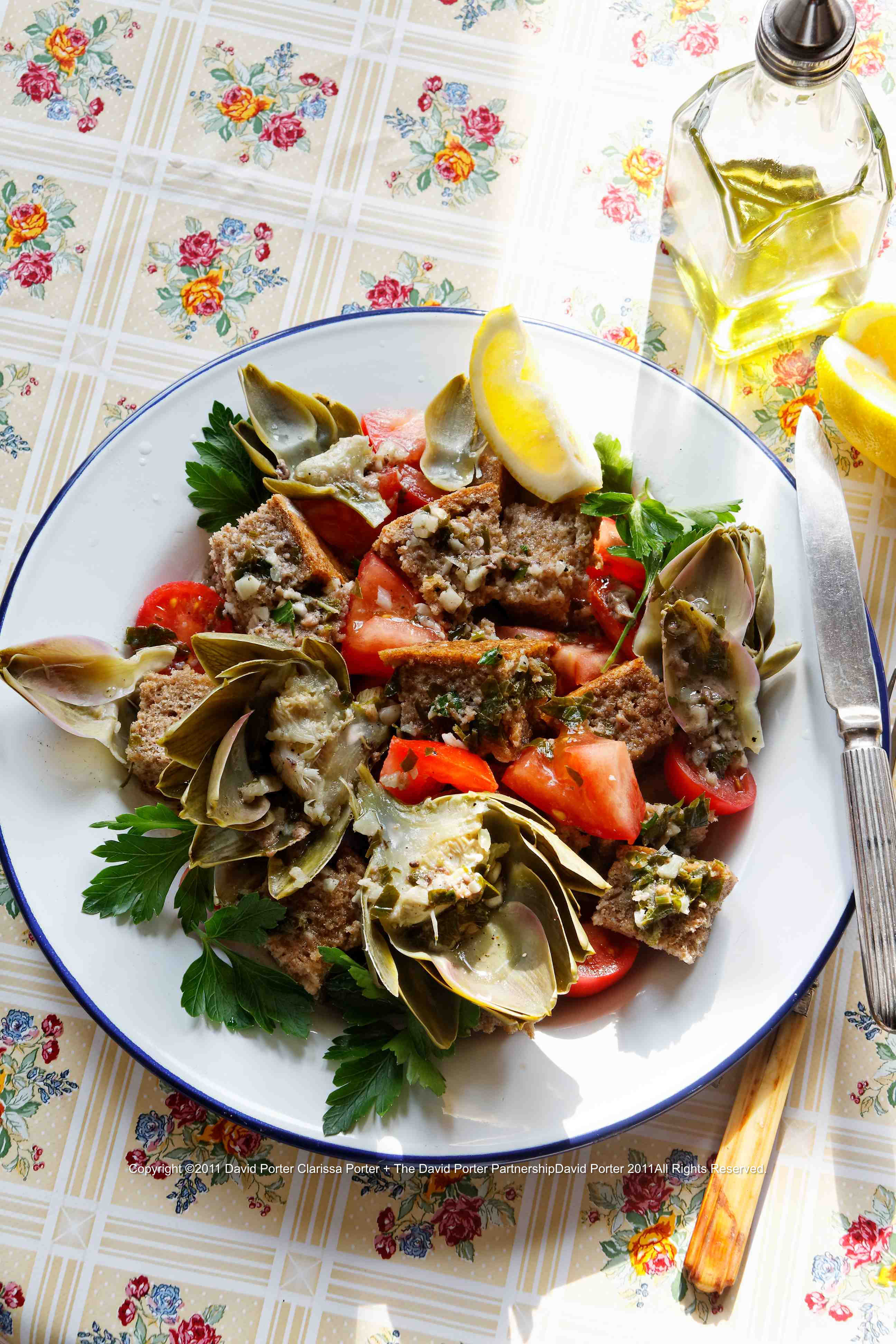
Warm Artichoke Salad
Ingredients:
4 baby artichokes, prepared as before
2 slices of thick (homemade?) wholemeal bread
Some ripe tomatoes, roughly chopped
2 spring onions, chopped
Juice of 1 lemon
A generous slug of olive oil
Freshly ground black pepper and a little sea salt
1 tin of anchovies, drained
Handful of parsley, chopped
Method:
Put the bread in a bowl with the tomatoes and onions then shake over a generous amount of olive oil, you know your own taste, add the lemon juice and season with pepper and salt. Leave for about 20 minutes.
Meanwhile, cook the artichokes for 10 minutes and drain, then slice in half from top to bottom.
Arrange the salad on 2 plates and top with the halves of artichoke, the anchovies, and finally the chopped parsley.



 Deptford Pudding